Die-making services
Die Tryout (Integration)
Integration and tryout of new dies: press trials and adjustments until the die produces parts of the required quality.
- Press tryouts
- Die fitting and correction
- Follow-up through to buy-off
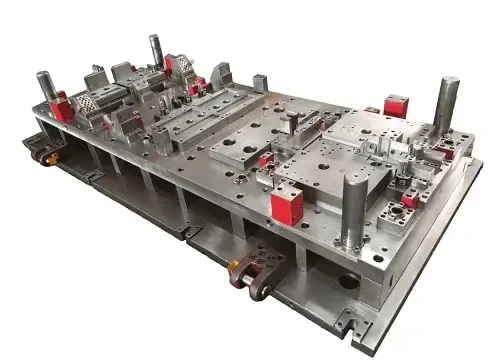
What die tryout is
A new die rarely produces the correct part at the first attempt. Tryout, also known as integration, is the set of press trials and adjustments carried out to correct the die until the parts meet the customer’s specifications.
Typical adjustments include geometry corrections, compensation for the material’s springback and dimensional inspection of the part.
Tryouts: press trials and adjustments
Tryouts are the trials of the die on the press. In each trial, the parts produced are analysed, deviations are identified and the tool is adjusted. The process is repeated until part quality is stable.
To carry out the tryouts, we work with partner companies that have suitable presses for each type of die. Rommat Try Out coordinates the trials, follows up the adjustments and keeps the customer informed at every stage.
Through to buy-off
Tryout ends with buy-off, when the customer validates the die and accepts it for production. Until then, a coordinator from our team follows the process and resolves any issue that may arise.
Scope
What the service includes
-
Press trials
Die tryouts on presses from partner companies suited to each tool.
-
Die adjustment
Geometry correction, springback compensation and adjustments until the correct part is obtained.
-
Dimensional inspection
Inspection of the parts from each trial to check that they meet the specifications.
-
Buy-off
Follow-up until the customer validates the die and accepts it for production.
Method
How we coordinate each project
Rommat Try Out coordinates the whole process and partner companies carry out the specific industrial processes. The customer always deals with a coordinator.
-
Study of the job
We analyse the part, the die and the customer’s requirements to define the scope of the work.
-
Assigned coordinator
A coordinator takes charge of the project and is the customer’s point of contact at every stage.
-
Allocation among partners
Each industrial process is assigned to the partner company with the right resources.
-
Continuous follow-up
We follow every stage, control lead times and resolve any issues that arise.
-
Validation and buy-off
The work ends when the customer validates and accepts the die.
Information and quotes
Tell us the type of work, the part and the expected timescales. We will reply with the information needed to assess the project.